

Turkey Wedding Ceremony
What You Need to Know
When planning a Turkey wedding ceremony, it’s essential to understand the legal requirements and the types of ceremonies available. Whether you’re opting for a civil, religious, or symbolic ceremony, this guide will help you navigate the process.
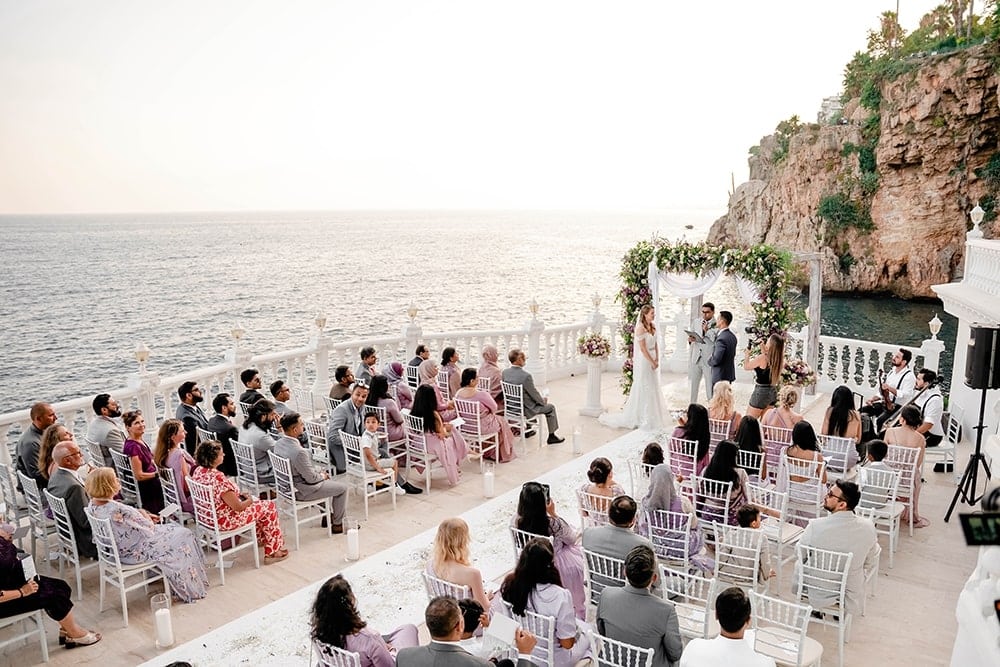
Wedding by Anta Orginization Wedding Planner
Understanding Marriage Laws in Turkey
If you’re planning to get married in Turkey, it’s important to familiarise yourself with the country’s legal requirements, including documentation, residency rules, and official procedures. For a detailed overview covering necessary documents, eligibility criteria, and step-by-step guidance on the application process [Click Here].
Below is a summary of the different types of wedding ceremonies you can choose from in Turkey, each offering its own unique approach to celebrating your marriage.
Civil Wedding Ceremony in Turkey
Legal Recognition & Requirements
In Turkey, only a civil wedding ceremony is legally recognised. This must be conducted by a municipal authority (local marriage registrar) or a census officer. A religious ceremony in Turkey is not valid unless it follows a civil wedding.
Language & Translator Guidance
The ceremony is conducted in Turkish. If neither you nor your partner speaks the language, a translator is required. Some local registrars only accept certified interpreters to translate the ceremony into English or other languages, so check with the Turkish Embassy for an official list. If you’re using a wedding planner or tour operator, they typically handle translator arrangements.
Location & Duration
Civil ceremonies usually last around 10 minutes and can be held in a variety of locations, excluding religious or cultural heritage sites, unless you obtain special permits from the Ministry of Culture and Tourism.
Documentation & Witnesses
During the ceremony, both partners are required to sign two application forms along with the official marriage registry book. In some instances, the registrar may also ask one of the parties to sign a separate log book to confirm that the marriage certificate has been received. The presence of two witnesses is mandatory, and they must not be immediate family members of the couple.
Personalising Your Ceremony
While the legal part of the ceremony is quite brief and formal, many couples choose to add a personal touch once the registrar has completed the official proceedings. This might include exchanging vows, sharing meaningful readings, or incorporating a ring exchange, which is not part of the standard Turkish civil ceremony but can be added for symbolic purposes.
Top Tip: Use a Wedding Professional
Navigating the legal requirements for getting married in a foreign country can be challenging. Hiring a local wedding planner in Turkey can make the process much smoother, as they can assist with paperwork and, where permitted, act on your behalf. Many Turkish wedding planners offer a dedicated legal support service for a one-time fee, without requiring you to book any additional wedding planning services. Connect with trusted wedding planners in Turkey [Click Here].
Religious Wedding Ceremony in Turkey
Legal Standing
In Turkey, a religious ceremony is not legally binding.
Order of Ceremonies
If you would like to have a religious ceremony, you must first have a civil ceremony. Many couples choose to have their civil ceremony the day before their religious ceremony or have their civil ceremony in their country of residence prior to arriving in Turkey. However, it is possible to organise a religious ceremony to immediately follow a civil ceremony.
Venue & Preparation
Most religious ceremonies must take place in the relevant place of worship and may require more time to prepare than a civil ceremony, as specific authorisation may be required from the local clerics.
Documentation
You may be required to prove that you are already married, so ensure that you bring your civil marriage certificate with you.
Symbolic Wedding Ceremony in Turkey
Flexibility & Personalisation
Some couples choose to separate the legal and ceremonial aspects of their marriage. In these cases, the legal civil ceremony is completed in their home country before traveling to Turkey for a symbolic wedding ceremony. This allows for greater flexibility and personalisation on the wedding day, free from legal formalities. The symbolic ceremony is often treated as the true celebration of the marriage, with custom vows, meaningful rituals, and the presence of friends and family, even though it holds no legal status.
Guest Experience
Guests are often unaware of the earlier civil marriage, allowing the symbolic ceremony to feel like the true wedding. This type of ceremony offers full personalisation, free from legal constraints, and can include custom vows, readings, and rituals that reflect the couple’s values and story.
Ready to Start Planning: Quick Links
👉 Learn More [ Legal Requirements for Weddings in Turkey ]
👉 Find Experienced [ Wedding Planners to Help With the Legal Requirements & Planning in Turkey ]
👉 Explore [ Wedding in Turkey – Starter Guide ]
Getting Married in Turkey - Planning Essentials

Turkey Legal Requirements
Everything you need to know, from paperwork preparation to submission.

Turkey Planning Guide
Explore the Turkey Wedding Guide for legal info, ceremony types, vendors, reviews & tips.

Wedding Planning Tools
Downloadable wedding abroad tools to help you stay on track from the very beginning.

Step-by-Step Planning Guide
An easy to follow guide covering every stage of the wedding planning process.
Requirements are subject to change in accordance with the laws of Turkey. Information updated as at May 2025. Is there anything wrong with this page? Let us know here. We are grateful for you helping us to keep the information up to date.